
Overview
After a stroke, many families feel unsure about what comes next. Rehabilitation helps the brain and body relearn skills, and families play a big part in that process.
Recovery after a stroke is different for everyone. Progress can continue for months and even years.
The early weeks
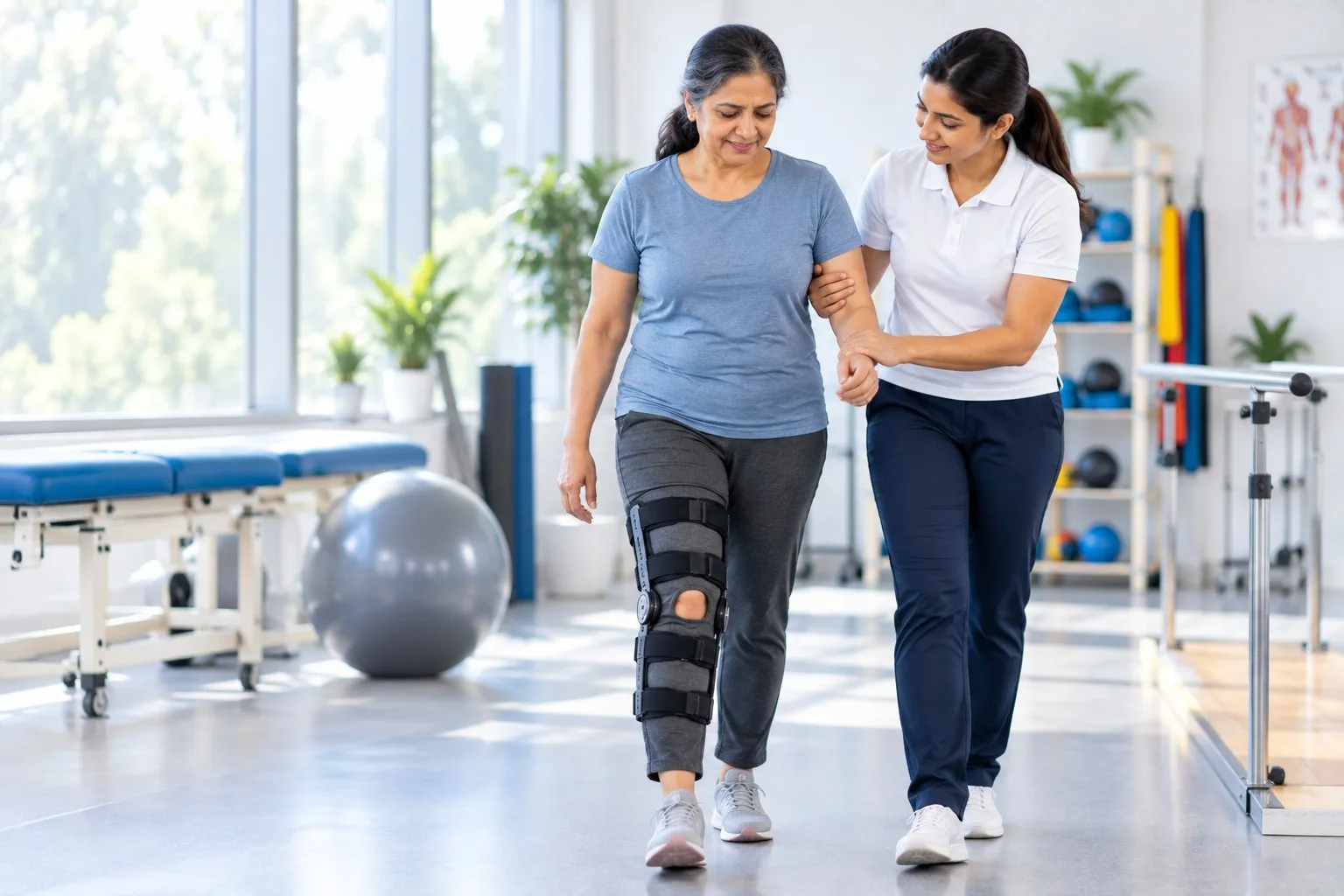
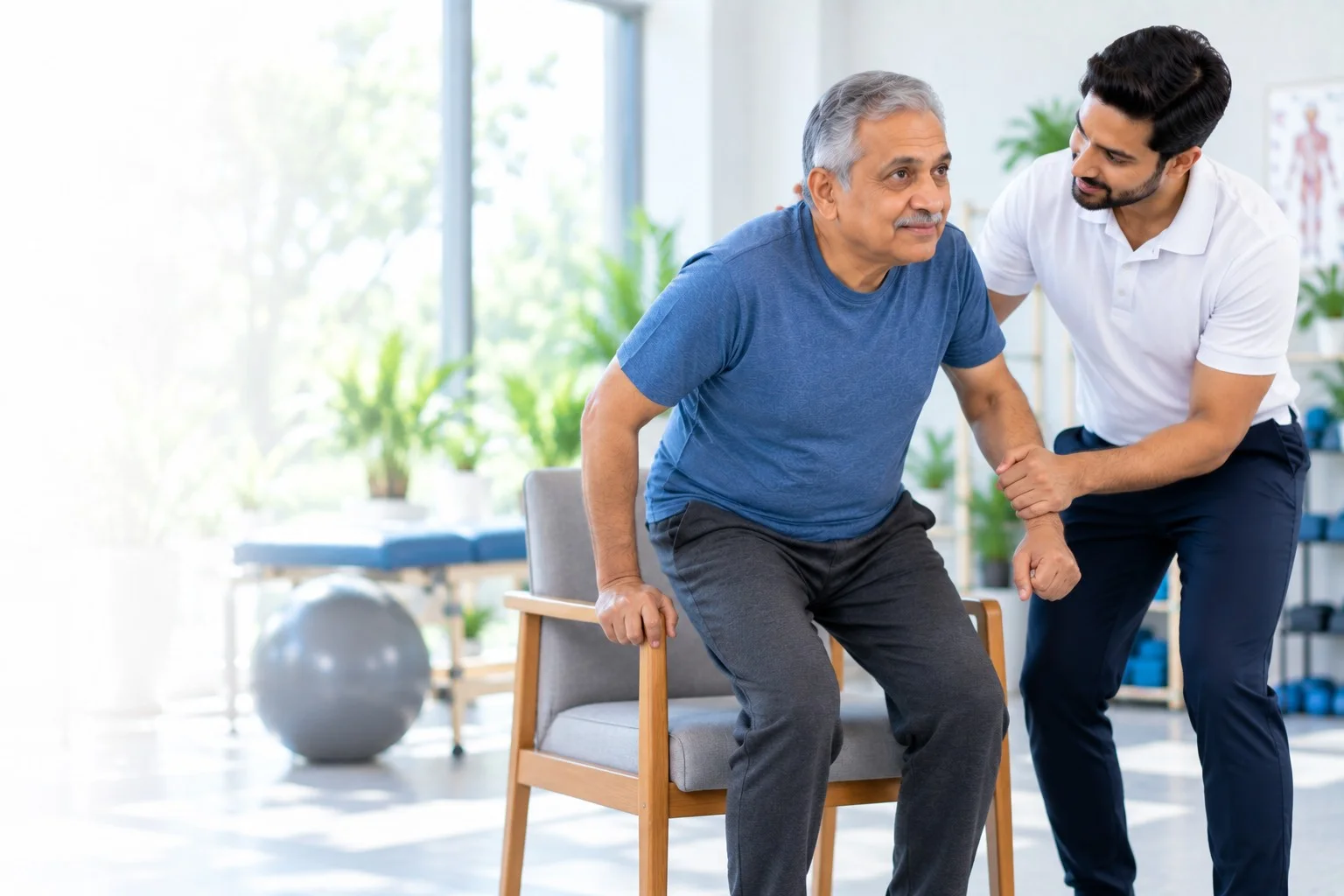
The focus is on safety: sitting balance, moving from bed to chair, and walking short distances with support. Fatigue is common, so sessions are short and frequent.
How families can help
- Encourage practice of exercises between sessions
- Let your loved one do as much as they safely can
- Keep the home clear of trip hazards
- Celebrate small wins — they add up
Common challenges
- Weakness on one side of the body
- Balance problems and fear of falling
- Fatigue and changes in mood
- Difficulty using the affected hand
Signs of another stroke
Call Rescue 1122 immediately if you notice face drooping, arm weakness or speech difficulty. Think F.A.S.T. — Face, Arms, Speech, Time.
Key takeaways
- Rehabilitation focuses on safety first, then independence.
- Families are part of the team.
- Progress can continue long after the stroke.
FAQs
How long does stroke rehabilitation take?
It varies. Progress is often fastest in the first months, but many people keep improving long after a stroke.
Can rehabilitation happen at home?
Yes. Home visits are often ideal, because we can practise in the places your loved one uses every day.