
Related article
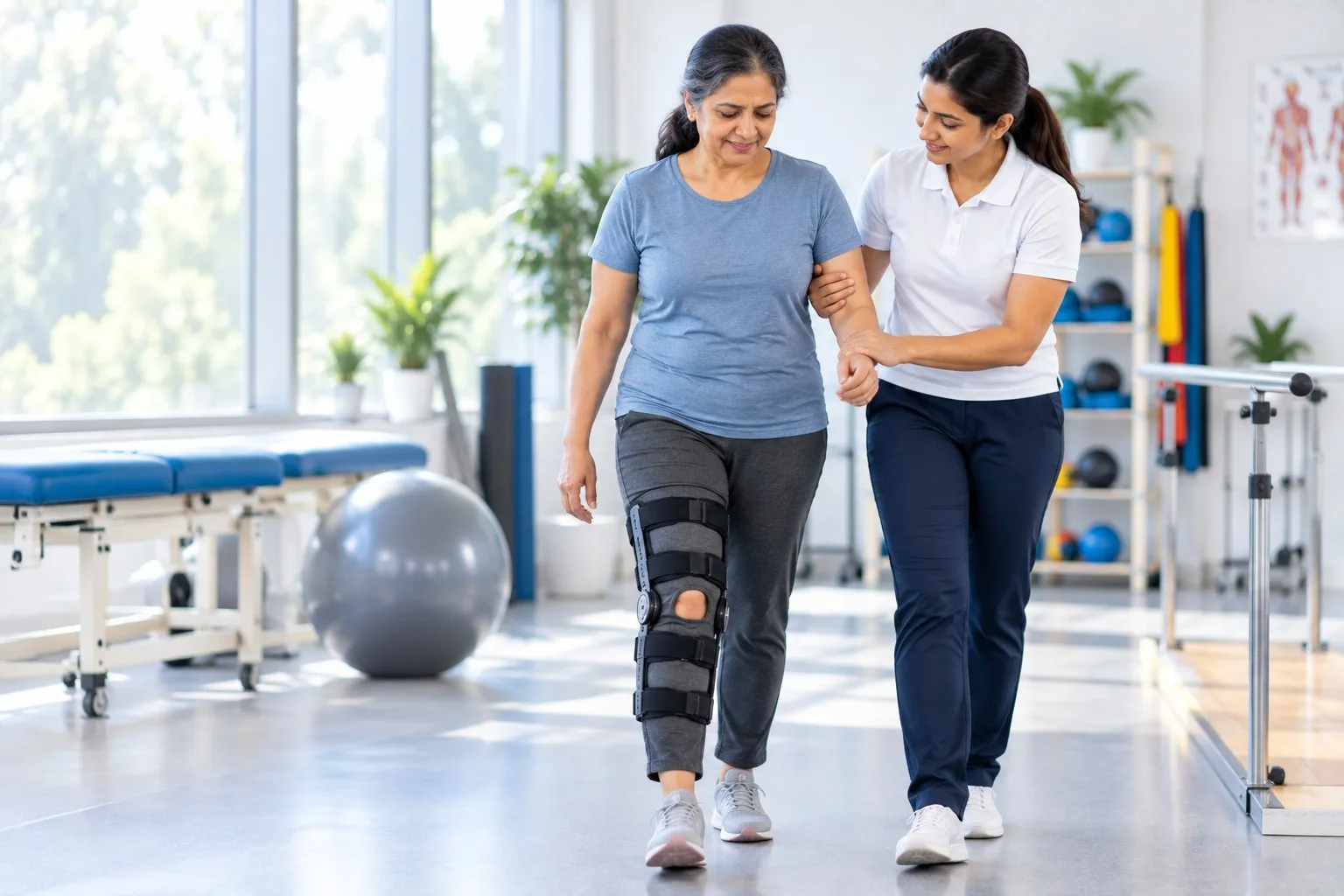
What does rehabilitation after knee replacement involve?
A step-by-step overview of the recovery process, from the first days after surgery to getting back to everyday life.
Read Article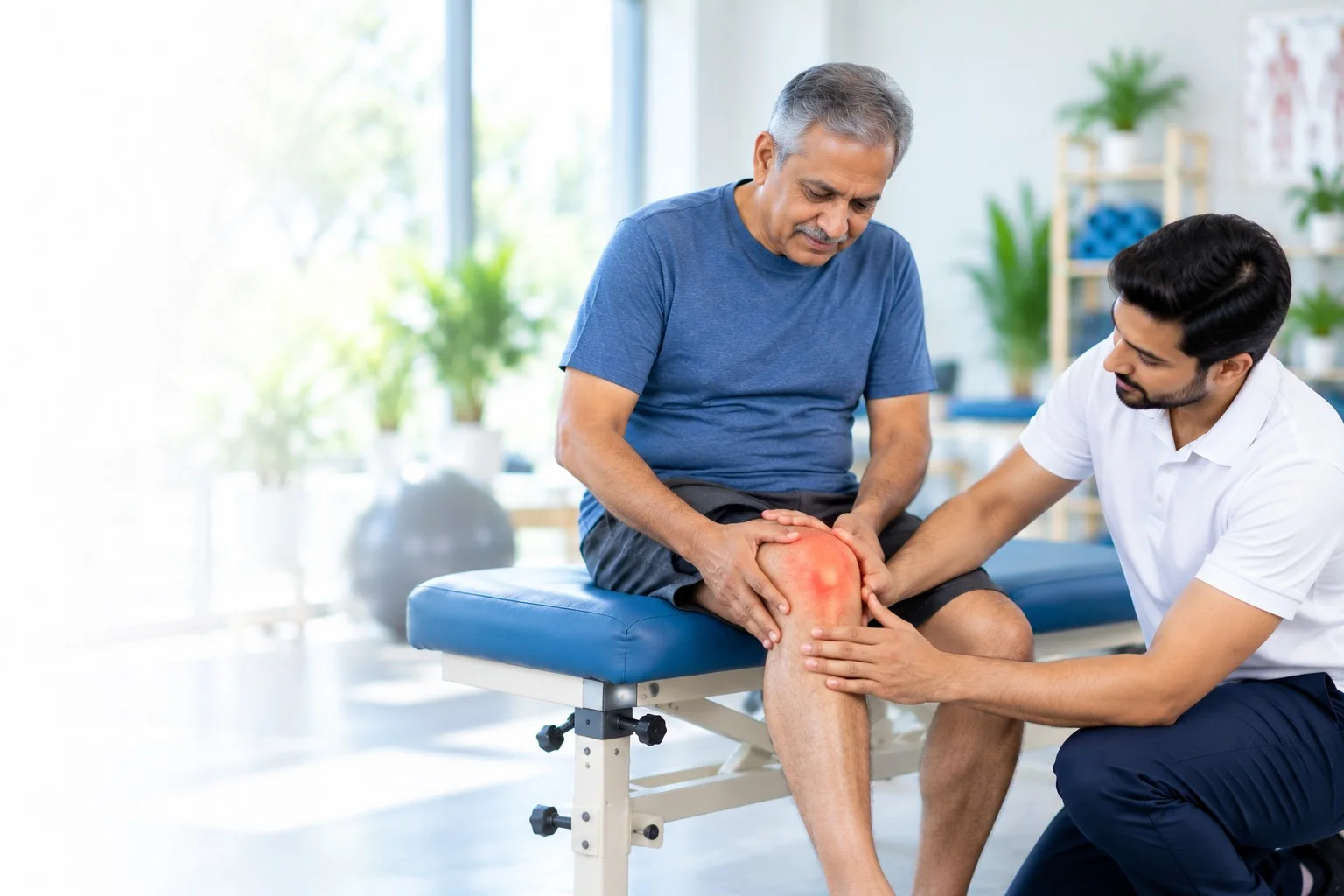

360°Carearoundyou
Conditions we treat
Knee pain can come from injury, overuse or arthritis. Strengthening the muscles around the knee is one of the most effective ways to reduce pain and get moving again.
Book an AssessmentUnderstand the symptoms
Knee Pain can feel different for everyone. You may experience one or more of the following:
At the front, sides or back of the knee.
Especially after activity or in the morning.
Pain going up or down, or squatting.
The knee feels unstable or weak.
Catching or clicking when you move.
Why it happens
When to seek help
Early assessment and the right exercises can help reduce pain, improve movement and prevent the problem from coming back.
If you have any of these, call Rescue 1122 or go to your nearest emergency department — don’t wait for a physiotherapy appointment.
How we help
Our treatment is tailored to your symptoms, lifestyle and goals.
We assess your knee, hips and how you walk to find the cause.
Exercise-based treatment with hands-on care where it helps.
We rebuild strength in your thigh and hip muscles to support the knee.
We guide you on activity, footwear and weight management to protect your knee.
Typical recovery timeline
Recovery varies from person to person. This is a typical guide, not a guarantee.
Weeks 1–2
Pain and swelling reduce as you start targeted exercises.
Weeks 3–8
Walking and stairs become easier as muscles get stronger.
8+ weeks
Return to your usual activities with a plan to keep your knees strong.
Related article
A step-by-step overview of the recovery process, from the first days after surgery to getting back to everyday life.
Read ArticleFrequently asked questions
Yes. The right exercise is one of the best treatments for knee arthritis and can reduce pain and stiffness.
Sometimes a brace helps for a while. We’ll advise whether one is useful for your knee.
For many people, a structured exercise programme improves pain and function enough to delay or avoid surgery.
No. You can book an assessment directly. If we think you need scans or a doctor’s opinion, we’ll tell you and help you arrange it.

Sameexpert care.A brightertomorrow.
Your next step